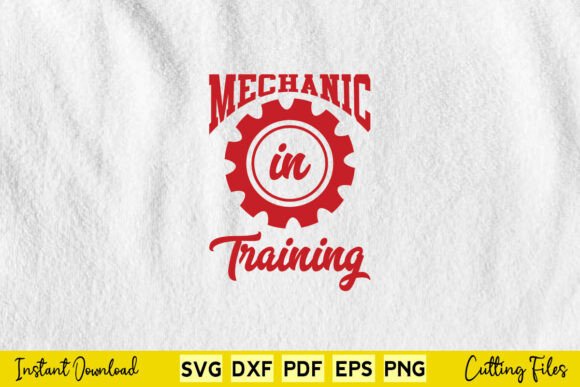
Funny Mechanic in Training Free Svg Review
When I first opened the file for the Funny Mechanic in Training Free Svg, my immediate reaction wasn't about the price point or the download speed. As a designer who has spent years turning digital files into tangible, stitched goods, my eyes went straight to the composition and the potential for real-world application. In the crowded world of crafts and graphics, it is easy to get lost in generic clip art, but this design caught my attention because it feels like something that could actually survive the rigors of a sewing machine.
I often tell my clients that a design isn't just an image; it is a blueprint for labor. You have to ask yourself: how will this look after fifty washes? Will the tiny details get lost in the fabric weave? Does the layout work on a curved surface like a cap or a flat panel like a tote bag? The Funny Mechanic in Training Free Svg carries a distinct mood right from the start. It is playful, slightly irreverent, and perfectly tailored for the "little mechanic" demographic. It screams custom gift, personalized baby shower item, or a fun addition to a small business's apparel line. But does it hold up under the needle?
The First Stitch: Real-World Application Scenarios
Let me take you through a specific scenario where I tested this concept mentally before ever touching a hoop. Imagine you are preparing for a local craft fair or fulfilling orders for a boutique shop. You need a product that appeals to parents who want their children to feel part of the family trade. A sweatshirt embroidery project featuring a young child with tools seems perfect. However, not every design translates well from screen to cotton fleece.
The Funny Mechanic in Training Free Svg has a visual personality that suggests it belongs on sturdy fabrics. I envision this as a high-quality embroidered patch on a denim apron for a toddler's play kitchen, or perhaps centered on the chest of a heavyweight hoodie. The layout is balanced enough to handle the slight distortion that happens when stitching onto stretchy materials like jersey knit t-shirts. If you are an Etsy seller looking to list a "Baby Boy Mechanic Gift," this design offers the kind of immediate recognition that drives clicks. It tells a story instantly without needing a paragraph of text.
But what about the finer details? When I looked at the lines and shapes, I noticed they lean towards clean, bold strokes rather than intricate filigree. This is a crucial observation for anyone working with machine embroidery design. Intricate details often disappear when converted to satin stitch or fill stitch, especially if the thread count is high. This design seems designed to avoid that pitfall. It promises clarity even when scaled down for smaller items like pillow covers or tea towels. For a holiday gift, the simplicity allows the color of the thread to do the heavy lifting, creating a vibrant finished product that stands out on a shelf.
Navigating Fabric and Hoop Challenges
While the design is promising, no professional review would be complete without addressing where things can go wrong. The Funny Mechanic in Training Free Svg is versatile, but versatility comes with constraints. One of the first things I check is the density of the stitches. If the original file contains areas that are too dense, the fabric might pucker, ruining the professional look of your handmade product.
You must be cautious when attempting to use this design on textured fabrics. Think boucle wool or heavily napped fleece; the needle might struggle to penetrate deeply enough to catch the backing, leading to loose threads or skipped stitches. Similarly, if you are planning to use this on thin fabric, such as a lightweight summer dress or a sheer curtain, the stabilizer requirements become critical. Without proper support, the design could pull the fabric, making the garment look wrinkled even after washing.
Another area requiring careful consideration is the size of the hoop. If you are trying to fit this design onto a small cap or a tight wrist cuff, you might find that the curves of the design conflict with the curvature of the hat. Curved surfaces demand designs that wrap around naturally. While this graphic has a friendly vibe, complex angles might flatten out or distort if the hoop size is too small for the full width of the artwork. Always test the design in black and white mockups first to ensure the negative space works as intended. This step helps you visualize how the background fabric interacts with the stitched elements, ensuring the contrast remains sharp whether you are using light or dark fabric backgrounds.
Visual Appeal and Brand Consistency
In the world of commercial embroidery, visual appeal directly impacts customer trust. A sloppy stitch job can make a $30 item look like a dollar store knockoff. The Funny Mechanic in Training Free Svg contributes positively to brand consistency because its style is cohesive. It doesn't try to be everything to everyone; it owns the "funny mechanic" niche. This focus makes it easier for small shop owners to build a recognizable aesthetic across their inventory.
For buyers, the clarity of the design matters. When a customer receives a personalized gift, they are looking for quality. If the lettering is blurry or the shapes are jagged due to poor digitizing, the emotional value of the gift diminishes. This design appears to prioritize legibility and shape definition, which are essential for maintaining a professional presentation. Whether it is going on a baby blanket or a kitchen towel, the finished product needs to look intentional and polished.
Furthermore, the design's adaptability extends to printable mockups. If you are a digital product seller offering these files, having a clear, high-resolution version allows you to create compelling previews. Customers need to see exactly how the Funny Mechanic in Training Free Svg will look before they commit to buying. Clear visuals reduce return rates and increase buyer engagement, as customers feel confident in what they are purchasing.
Practical Notes for the Embroidery Designer
Before you rush to print your first batch of custom apparel, there are a few non-negotiable steps every experienced maker takes. First, always test the design on scrap fabric. This simple act saves time, thread, and frustration. You need to verify that the stitch density is appropriate for your specific machine and that the thread colors provide sufficient contrast against your chosen material.
Review the stitch types carefully. Is the outline a satin stitch? Are the fills running vertically or horizontally? Understanding the stitch structure helps you anticipate how the design will behave on different fabrics. If the design includes tiny lettering, inspect those corners closely. Tiny details are often the first to break down during frequent washing, so ensure they are robust enough to last.
Don't forget the technical basics. Confirm your hoop size matches the design dimensions. Use the proper stabilizer to prevent puckering. Check whether the design works for both personal and commercial projects by reviewing the licensing terms provided with the download. If the description mentions it is a digital product, remember that you are responsible for ensuring you have the rights to sell finished items made from it.
Finally, compare the design on various backgrounds. A design that looks great on white might vanish on grey. By testing light and dark fabric backgrounds, you ensure that your final product maintains its impact regardless of the customer's choice. With the right preparation, the Funny Mechanic in Training Free Svg can be a standout asset in your collection of design assets, ready to bring smiles to faces and profits to your craft business.